


Austrian research organization Virtual Vehicle is expanding its maritime research activities through a new COMET research center called Software-Defined Mobility (SDM), set to launch on January 1, 2027. The program brings together 44 partners from industry and science, with a planned research volume of €24m (US$27.7m) in its first four-year funding period, according to Virtual Vehicle. The initiative is approved by the Austrian Research Promotion Agency (FFG) under the Austrian COMET program, with a funding rate of 50%.
COMET SDM will address the shift toward software-defined, connected and autonomous mobility systems, including ships and other maritime applications, alongside the automotive, rail, health tech, energy and defense sectors. The center will be structured around three research fields – trustworthy simulation, autonomous intelligence and efficient systems – along with a Living Innovation Lab intended to translate research into demonstrators and prototypes.
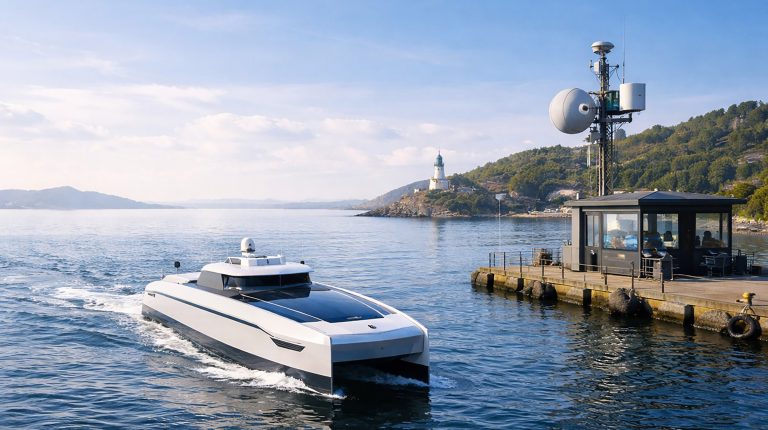
For maritime applications specifically, Virtual Vehicle says the research will support virtual engineering and validation of vessel functions and autonomous systems, as well as environmental perception, object detection, decision-making, path planning and collision avoidance for uncrewed surface vessels.
Daniel Watzenig, CTO of Virtual Vehicle, said, “With COMET SDM, we are taking the decisive step from virtual validation toward virtual assurance. In doing so, we are creating the foundation for a new generation of safe and trustworthy AI-supported systems in mobility.”
Virtual Vehicle said its maritime work already extends beyond simulation. In cooperation with Gdańsk University of Technology and project partner Sankt Hubertus Boote & Yachten, the organization has installed a modular sensor bar – combining radar, lidar, RGB cameras and thermal imaging – on a research vessel and conducted measurement campaigns under real sea conditions. Virtual Vehicle said the resulting datasets support sensor evaluation and algorithm development for autonomous navigation and collision avoidance, and that the sensing platform is designed to be mounted on vessel types ranging from research platforms to commercial and autonomous surface vessels.
Jost Bernasch, CEO of Virtual Vehicle, said, “Europe must combine its strengths in engineering and industrial excellence with software, data and AI in order to remain competitive in the future. With COMET SDM, we are creating a strong research center for this in Graz, together with leading partners from industry and science.”
You can read more on Virtual Vehicle’s SDV digital assurance framework for road vehicles in the September edition of Automotive Testing Technology International