


Close Menu
Advanced Maritime Technology International
  • News
    • A-M
      • Battery Technology
      • Environmental
      • Equipment and Services
      • Expo
      • Ferries and Cruises
      • Marine Construction
      • Marine Renewables
    • N-Z
      • Naval Projects
      • Onboard Systems
      • Ports and Harbours
      • Power and Propulsion
      • Shipyards and Shipbuilding
      • Vessel Build and Maintenance
  • Features
  • Online Magazines
  • Opinion
  • Videos
  • Supplier Spotlight
LinkedIn Facebook X (Twitter)
  • Sign-up for Free Weekly E-Newsletter
  • Meet the Editors
  • Contact Us
  • Media Pack
LinkedIn
Subscribe
Advanced Maritime Technology International
  • News
      • Alternative Fuels
      • Autonomous Technology
      • Awards
      • Battery Technology
      • Expo
      • Ferries and Cruises
      • Hydrogen
      • Legislation
      • Motor Technologies
      • New Vessels
      • Onboard Systems
      • Ports and Harbours
      • Power and Propulsion
      • Shipyards and Shipbuilding
      • Vessel Design
  • Features
  • Online Magazines
    1. September 2026
    2. April 2026
    3. January 2026
    4. September 2025
    5. April/May 2025
    6. January 2025
    7. September 2024
    8. April 2024
    9. Archive Issues
    10. Subscribe Free!
    Featured
    August 20, 2026

    In this issue – September 2026

    Online Magazines By Web Team
    Recent

    In this issue – September 2026

    August 20, 2026

    In this issue – April 2026

    May 5, 2026

    In this issue – January 2026

    December 4, 2025
  • Subscribe
  • Opinion
  • Videos
  • Awards
    • Electric & Hybrid Marine Awards 2025 – Nominations open
    • 2024 Winners
    • 2023 Winners
    • 2022 Winners
    • Previous Winners
  • Supplier Spotlight
  • Expo
LinkedIn Facebook
Subscribe
Advanced Maritime Technology International
Legislation

Bibby Marine says battery-first eCSOVs can deliver 40% fuel consumption reduction over traditional CSOV vessels

Alex PackBy Alex PackSeptember 28, 20262 Mins Read
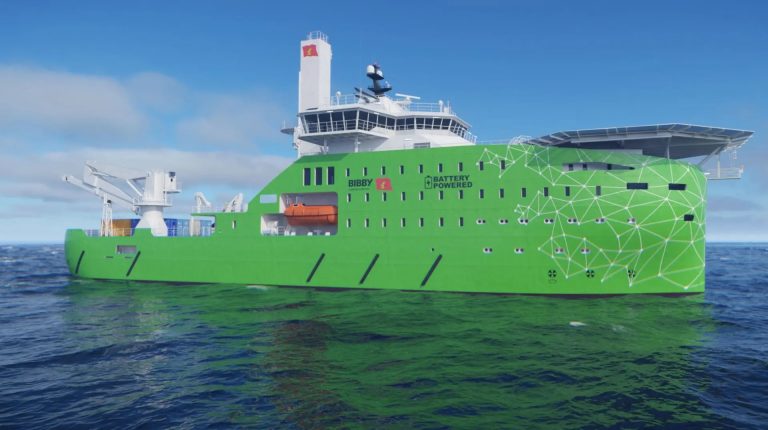
A green Bibby Marine battery-first eCSOV in calm blue waters on a sunny day.
Share
LinkedIn Twitter Facebook Email

Bibby Marine has urged the offshore wind industry not to wait for electric charging infrastructure to become the norm before choosing service vessels designed to deliver operational efficiencies through reduced fuel consumption and carbon emissions.

The company’s battery-first eCSOV is under construction at Armon Shipyard in Vigo, Spain. It is due to launch in mid-2027 and is expected to enter service in 2027, operating on a battery-first, self-charging basis supported by dual-fuel methanol/MGO generator sets.

In a battery-first design, onboard dual-fuel generators charge batteries that provide power and propulsion for the entire vessel. Bibby Marine said this enables allows the generators to operate at a more consistent and efficient load rather than continuously responding to changing power demand, which it says reduces fuel dependency and contributes to lower operating costs and emissions.

The company said that fuel consumption of the vessel’s gen-sets can be around 40% less than that of a traditional CSOV using internal combustion engines for power and propulsion, which reduces operators’ exposure to volatile fuel prices and rising carbon costs.

Bibby Marine stressed that the vessel is not a zero-fuel proposition. However, it said the battery-first design can take advantage of onshore and offshore charging infrastructure as it is deployed, enabling zero-fuel operation as charging infrastructure becomes increasingly available.

Kevin Brown, commercial director at Bibby Marine, said, “One of the biggest misconceptions surrounding vessel electrification is that it only delivers value once offshore charging infrastructure is in place. That’s simply not the case.

“Our battery-first design has been developed to deliver meaningful commercial benefits from day one. The batteries provide the primary source of power, while onboard generators recharge the system at a steady, efficient load.

“Battery-first vessels allow operators to begin reducing operating costs immediately, while ensuring they are ready to take advantage of offshore charging as the infrastructure develops.”

Related news, AYK Energy to launch swappable marine battery container

Share. Twitter LinkedIn Facebook Email
Previous ArticleThames Clippers urges UK government to restore fuel credit eligibility for tidal rivers
Next Article Simcenter digital twin delivers hydrodynamic performance for Bluegame BGF45

Related Posts

Battery Technology

Siemens selects EST-Floattech battery system for Marco Polo Marine’s CSOV Plus

October 2, 20263 Mins Read
New Vessels

First electric passenger vessel for National Audubon Society

October 1, 20262 Mins Read
Environmental

WK NatPower and AREL to invest in Hong Kong’s maritime electrification revolution

September 23, 20262 Mins Read
Latest News

Kraken and Saab UK test autonomous drone-seeker prototype vessel

October 5, 2026

Siemens selects EST-Floattech battery system for Marco Polo Marine’s CSOV Plus

October 2, 2026

First electric passenger vessel for National Audubon Society

October 1, 2026

Receive breaking stories and features in your inbox each week, for free


Enter your email address:


Supplier Spotlights
  • Hydro
Getting in Touch
  • Contact Us / Advertise
  • Meet the Editors
  • Media Pack
  • Free Weekly E-Newsletter
Our Social Channels
  • LinkedIn
UKi Media & Events
© 2026 UKi Media & Events a division of UKIP Media & Events Ltd
  • Terms and Conditions
  • Privacy Policy
  • Cookie Policy
  • Notice & Takedown Policy

Type above and press Enter to search. Press Esc to cancel.