


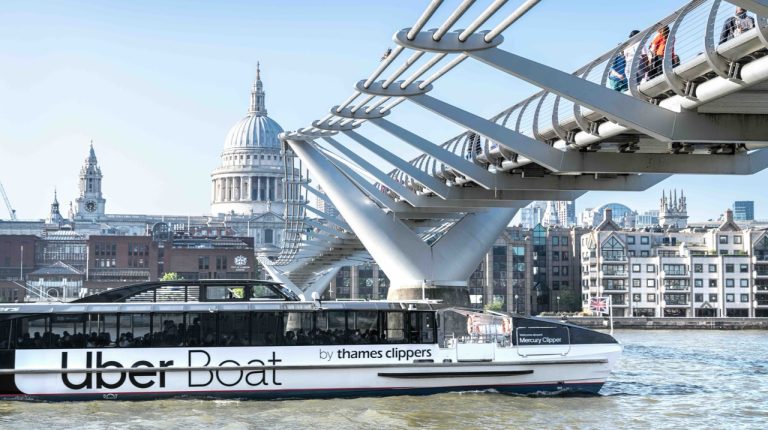
Uber Boat by Thames Clippers has called on the UK government to restore Renewable Transport Fuel Certificate (RTFC) eligibility for tidal rivers and estuaries, warning that the current policy is making renewable transition fuel more expensive for river transportation and risks slowing decarbonization on the River Thames.
In late 2025, changes to the Renewable Transport Fuel Obligation (RTFO) broadened eligibility in some areas around aviation and non-biological maritime fuels, but vessels operating on tidal rivers and estuaries, including the Thames, remain unresolved in terms of RTFC eligibility for hydrotreated vegetable oil (HVO), according to Uber Boat by Thames Clippers.
The company said the policy is inconsistent with the government’s own definitions of inland waterways and its published net zero and clean-air strategies, arguing that a bus and a river service making comparable journeys across London using the same transition fuel are treated differently, with only the bus remaining eligible for RTFCs. The company said it is not seeking a new subsidy or tax exemption but wants the existing policy framework extended to cover tidal rivers and estuaries.
Uber Boat by Thames Clippers said the cost gap has forced it to return to conventional diesel on parts of its fleet. It estimates that using HVO saves 17,152 metric tons of CO2e but costs nearly 50% more per liter than marine diesel. The company carries more than six million passengers a year and operates four hybrid vessels that run on electric power in central London.
“The River Thames should be one of London’s assets in the journey to net zero, but the current policy makes it extremely challenging for operators to commit to the use of cleaner fuels today,” said Geoff Symonds, chief development officer at Uber Boat by Thames Clippers. “We are investing in viable hybrid solutions for our high-speed vessels while technology for marine vessels develops further. The current policy makes lower-carbon fuel more expensive while leaving conventional diesel comparatively more attractive. This isn’t about asking for special treatment. It’s about making sure river transport is treated fairly and consistently alongside other public transport modes.”
In related news, UK’s first fully electric ferry becomes operational on the River Thames