

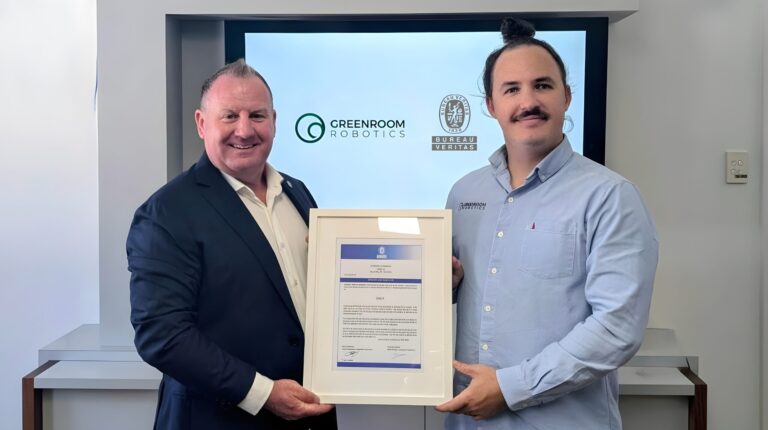
Bureau Veritas has granted approval in principle (AiP) to Greenroom Robotics’ GAMA maritime autonomy software. This is reportedly the first time Bureau Veritas has issued an AiP for self-navigation software.
The AiP confirms that, following a design-level assessment, the design principles of the software align with Bureau Veritas rules for autonomous and remotely operated vessels. The review was carried out in accordance with BV NI641 guidelines for autonomous shipping.
Greenroom’s GAMA software uses AI to support autonomous navigation by integrating data from onboard sensors to enable situational awareness, vessel monitoring, decision-making and control. The system can be operated on board or from a remote-control center. It has a modular architecture intended to support integration on new-build and existing vessels.
According to Bureau Veritas, the AiP provides an early-stage appraisal of the system’s technical approach and could support faster integration of autonomy into vessels, streamline flag-state approval processes and reduce risk for operators. The classification society said the approval also provides a pathway toward full certification.
Harry Hubbert, chief operating officer of Greenroom Robotics, said, “For shipbuilders and operators, this AiP accelerates the path to autonomy by validating GAMA’s design intent against class expectations. As one of the first maritime autonomy software to be granted AiP by Bureau Veritas, we’re proud to be leading the adoption of autonomy through proven and validated solutions.”
He added that the company will continue working with Bureau Veritas to develop autonomous navigation, situational awareness and operations management technologies.
Alex Gregg-Smith, president of marine and offshore at Bureau Veritas, said, “Maritime autonomy represents a significant development for the industry, requiring both innovation and strong confidence in safety and governance. This approval in principle reflects Bureau Veritas’s role in supporting the structured development of autonomous technologies while helping industry stakeholders navigate emerging regulatory and technical expectations.”
The AiP follows a memorandum of understanding signed by the two companies in 2024 to collaborate on maritime robotics, autonomous navigation and operations management. Both organizations said they will continue working together under the agreement as development of autonomous maritime systems progresses.
In related news, Garrett Motion launches MEG turbocharger platform for marine and power applications