


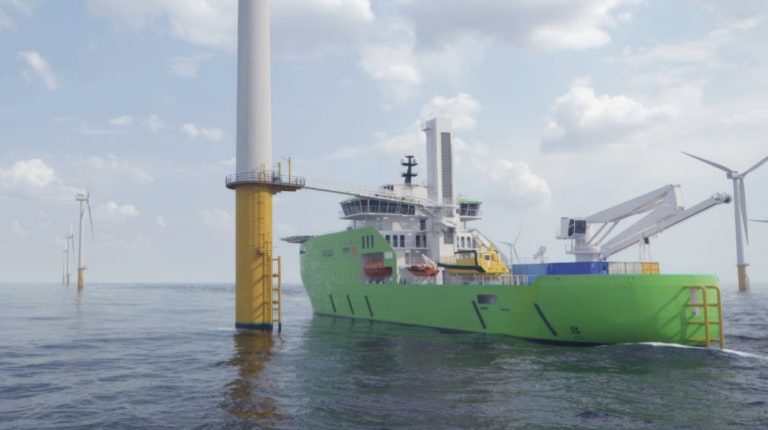
A cross-industry coalition including Bibby Marine, offshore wind developers, vessel operators and technology providers is calling for regulatory and commercial changes to accelerate the electrification of offshore support vessels.
A new position paper, titled The Electrifying Proof, argues that offshore charging – where vessels draw renewable power directly from wind farms – is one of the most cost-effective routes to decarbonizing offshore wind operations, and that the main barriers to wider adoption are no longer technical but regulatory and commercial.
Vessel operations currently account for a significant proportion of offshore wind lifecycle emissions. The paper notes that offshore charging requires only a minimal share of a wind farm’s electricity output, making it a viable path to zero-emission operations.
The coalition sets out three key recommendations: integrating offshore charging into early-stage wind farm feasibility assessments to drive design standardization and lower procurement costs; clarifying commercial access to offshore electricity, including amending contracts for difference to cover use of offshore power by marine operations; and delivering a full-scale offshore charging demonstrator.
Gavin Forward, new-build fleet director at Bibby Marine, said, “The technology to enable offshore charging is already here. The challenge now is creating the right regulatory and commercial environment to bring it into widespread use. By addressing these barriers, we can unlock a practical and scalable route to decarbonizing offshore wind operations.”
Bibby Marine is currently developing what it describes as the world’s first electric commissioning service operation vessel (eCSOV).
The position paper was developed collaboratively by organizations across the offshore wind value chain, and the coalition is now urging policymakers, developers and other stakeholders to act on its recommendations.
In related news, ELIRE Maritime consortium validates grid-independent floating hydrogen power hub