


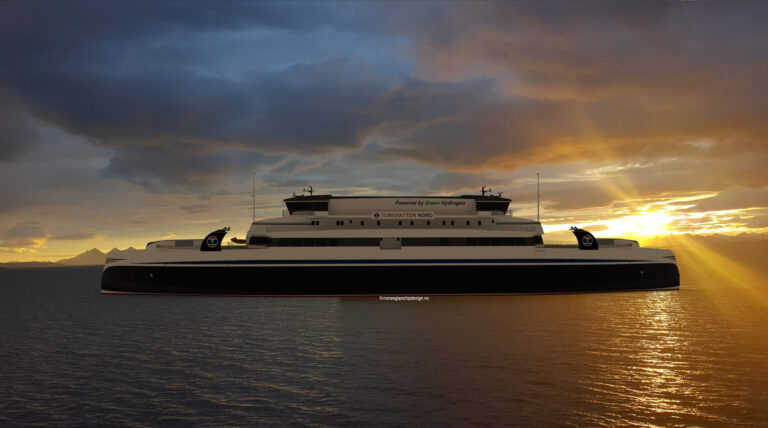
The large deep-sea commercial ships that need alternative fuels make up approximately 85% of the industry’s annual carbon footprint. However, it is the other 15% of emissions produced by smaller short sea vessels that can be eliminated with today’s technology.
Recent shipping debates have focused on the fact that the maritime industry is ultimately at the back of the queue when it comes to sourcing alternative green fuels, especially e-fuels derived from renewable energy sources, compared with other global sectors such as the steel, concrete and agriculture industries. Many of these will be scarce at the scale required for years and decades to come.
For large deep-sea shipowners, this poses a significant challenge. The shipping industry is trying to plan amid uncertainty not only about fuel choice but also about costs and future regulation. As a result, there is no certain pathway for shipowners and cargo owners to choose. There are multiple major decisions to be made right now, and making decisions under pressure is never ideal. So, viewing the maritime industry as a whole, what progress can be more realistically made today?
For smaller short sea vessels such as ferries, the regulatory landscape is slightly clearer – and, most importantly, the technology pathways that lead to decarbonized ships are more obvious. Those who own these 15% of short sea, largely fixed-route vessels could make a tangible choice today that would result in zero-emission propulsion. Sustainability strategies that include hydrogen fuel cells are one of the options. So, let’s set out the fuel cell technology pathway to zero-emission vessels.
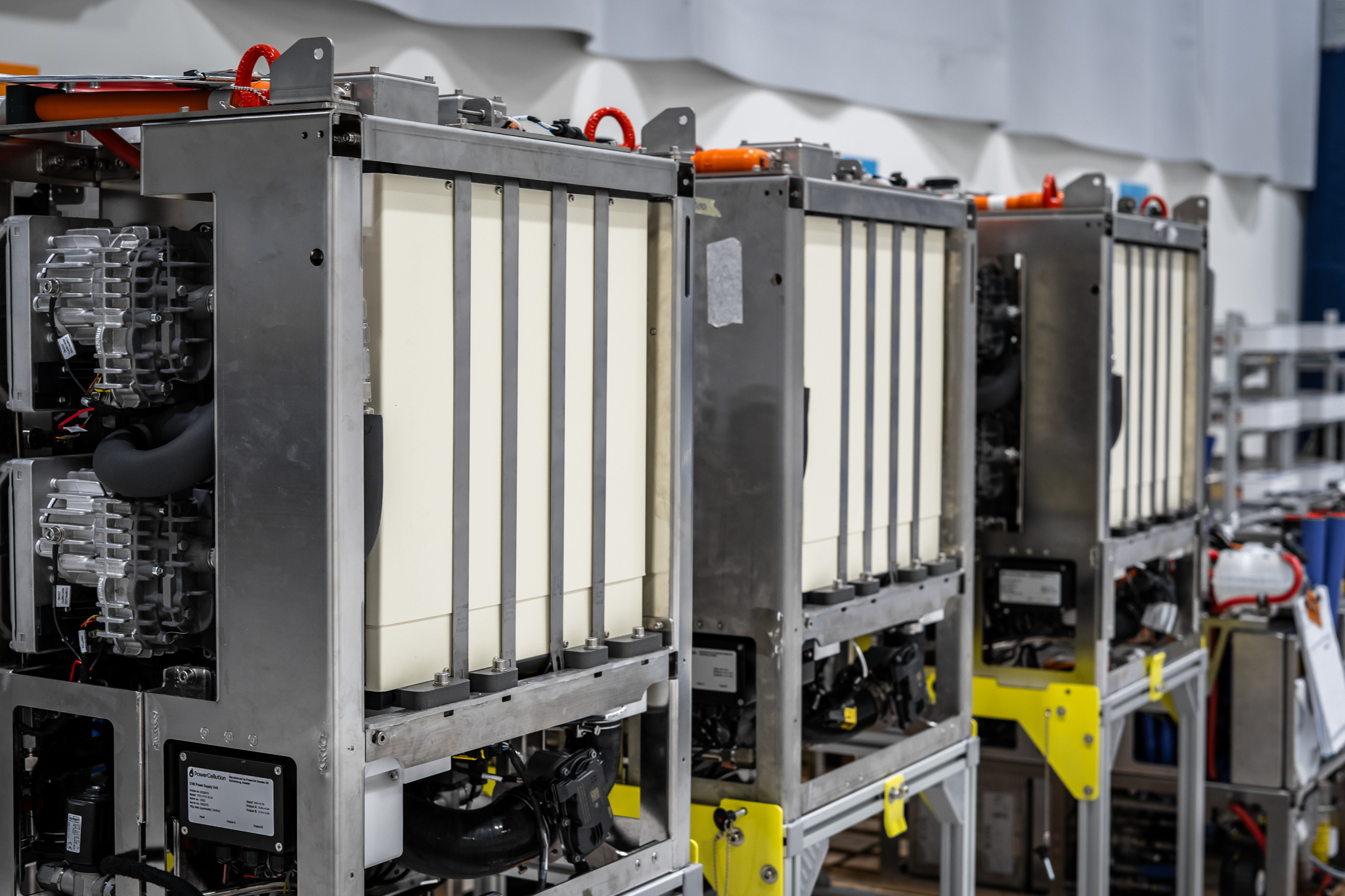
Fuel cells are commercially ready now and can serve as an effective power source for electric propulsion systems in ships, supporting the broader electrification of the maritime industry. There is already a new generation of marine-specific, more powerful fuel cells that can take on the heavy lifting of decarbonization as part of the phased transition away from fossil fuels and can tackle a major source of transportation emissions.
Fuel cells are also very efficient at converting chemical energy directly into electrical energy without the intermediate steps required for traditional combustion. This means that there is no need for a polluting combustion engine at all. Fuel cells also operate quietly compared with traditional engines, lowering underwater radiated noise (URN) in sensitive marine ecosystems and enhancing the experience for passengers and crew on board.
While it’s true that the capital expenditure for fuel cells has been high, the business case has improved significantly. First, as the maritime industry’s environmental regulations continue to evolve and tighten, progressively becoming more stringent, shipowners must expand the cost equation to include the costs of regulatory compliance. Carbon taxes and levies are also already changing the cost equation as a cost to the polluters. When you factor in long-term compliance with these environmental regulations, the commercial equation improves. Additionally, vessel (asset) values are becoming increasingly linked to environmental performance.
When costs are not viewed as static, shipowners should recognize the need to constantly reevaluate their decarbonization options. When looking at the broader, total cost of ownership, to include operating expenses such as fuel, and factoring in that cleaner fuels are more expensive and less energy dense, the business case is further enhanced. In a nutshell, as the act of polluting becomes more costly over time, the payback period for zero-emission technology is shortened.
Sustainability in the maritime industry is not just about ships, either. It is also about appropriate onshore infrastructure in the right locations. Fuel cells combined with hydrogen can address the question of charging infrastructure for fixed-route electrified ferries. Forward-thinking ports are already implementing the hydrogen infrastructure that will underpin more sustainable port operations and support the use of cleaner fuels and hydrogen fuel cells.
Fuel cells can be integrated into different types of vessels, including ferries, cruise ships and smaller boats. This makes them highly suitable for ‘the 15%’ as previously defined. Their versatility also makes them a viable option for various maritime applications, enabling almost all of that 15% of shorter sea, fixed-route ships across different sectors and vessel sizes to transition to cleaner energy solutions.
In conclusion, while uncertainty and indecision may hinder the major deep-sea shipowners for some time yet, the 15% have clear options for decarbonization. In the shipping industry as a whole, regulators, shipping companies and their customers should all look to decarbonize what they can today. Fuel cells are one of the leading technology pathways to zero-emission ferries and other smaller fixed-route ships, right now.