


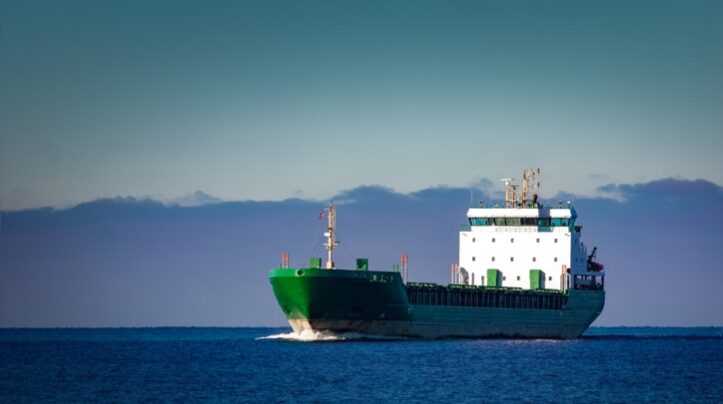
Frédéric Denèfle, president of the International Union of Marine Insurance (IUMI), looks into the IMO’s recent strengthening of its environmental ambitions and the key risks likely to emerge from the introduction of new GHG technologies
Along with most of the world, I applauded the new agreement made at COP28 in Dubai which asks the industry to accelerate its renewable and decarbonization activities. Shipping wasn’t mentioned directly but I was equally encouraged by IMO’s unanimous decision last year to achieve net zero by around 2050. This is a big ask for shipping as, currently, almost 99% of commercial vessels are still sailing on fossil fuels. But more positively, more than 20% of ships under construction or on order have the potential to operate in a much cleaner way. Clearly, the lion’s share of compliance with these climate ambitions will fall on the shoulders of the shipowner and it is good to see the leading owners already making significant steps toward decarbonization.
However, for shipping to make meaningful headway, there needs to be comprehensive cooperation and knowledge sharing between owner, class, flag states, technology providers and others, including insurers. This is going to be important as the first movers begin implementing their technologies which will, inevitably, be replicated throughout the fleet. We’ll need a comprehensive regulatory regime in place before this happens. I’m pleased to say that work on developing a safety roadmap is already underway at IMO, spearheaded by the International Association of Classification Societies (IACS) and co-sponsored by IUMI.
For us, as marine insurers, the implications are obvious. These new cleaner technologies will present new risks that we must fully understand before we can offer adequate insurance cover. Shipping has not yet settled on a single technology solution – and perhaps it never will – which means underwriters must keep abreast of this fast-developing landscape. While we remain in transition from fossil fuel to clean propulsion, we must also be fully aware of retrofit partial solutions such as wind-assisted propulsion and other eco-innovations. Hull insurers are also showing great interest in shipowners seeking to reduce their fossil fuel consumption while using onshore electricity to support their port operations.
The dangers of sustainable technology
Each potential technology solution carries its own set of risks. Ammonia, for example, is extremely toxic and flammable. Battery propulsion can lead to an uncontrollable and self-igniting condition known as thermal runaway. Biodiesel fuel can be highly corrosive and hydrogen-driven propulsion can be explosive if not managed correctly.
More positively, an increasing number of vessel owners are opting to use LNG dual fuel as a cleaner (but interim) measure and there are more than 1,000 such vessels currently operating or on order. LNG is not considered to be toxic or corrosive but there are risks associated with the extremely low storage temperatures which have the potential for vapour flammability and crew asphyxiation. Irrespective of the possible environmental disadvantages of LNG, the good news is that marine insurance has educated itself on this new type of propulsion and is actively providing adequate and affordable cover. I see no reason why the same can’t apply to longer-term solutions in the future.
Predictive risk management
There is a growing need for more information and analysis, which is changing how underwriters are assessing risk. Historically, we’ve used past performance indicators to predict future events but today we have a range of real-time, dynamic data covering engine performance, routing, weather patterns, geopolitical issues and more. This form of predictive risk management applied intelligently to an insurer’s risk portfolio will help them manage the new challenges arising from the switch to cleaner fuels.
Looking ahead
While all this is going on, we mustn’t lose sight of those who will operate the new global fleet, often in testing conditions. Protecting the safety and welfare of our seafarers must be paramount. As insurers, we also have a role to play in ensuring that crew safety initiatives are progressed equally alongside our environmental ambitions. We must recognize that significant and new training programs will need to be implemented to ensure our seafarers are fully trained and compliant with these new technologies and can operate them safely.
Aside from new propulsion technologies, our societal move to net zero will impact shipping – and marine insurers – in other ways. We are already starting to see greener cargoes being moved such as lithium-ion (Li-ion) batteries either as individual energy storage systems or as propulsion units for cars and trucks. Transporting these new cargoes has required underwriters to get to grips with a new set of associated risks. While the movement of Li-ion batteries is not inherently unsafe, there are certain conditions that make them less stable and more volatile. It’s important for insurers to offer loss prevention advice as well as suitable products to enable the ship and cargo owner to reduce their risk. It’s true to say that petrol- and diesel-operated cars and machinery, while potentially dangerous, have been safely transported by sea for many decades. The maritime industry has learned to manage these associated risks and I’m fully confident that, by working together, we will safely transport and insure these new cargoes – and new propulsion technologies – in the same way.
For more of the top insights into the maritime industry’s future of net-zero GHG emissions, read “How important are technical regulatory details to accelerate the decarbonization of marine fuels and reach net zero by 2050?”, here.