


Close Menu
Advanced Maritime Technology International
  • News
    • A-M
      • Battery Technology
      • Environmental
      • Equipment and Services
      • Expo
      • Ferries and Cruises
      • Marine Construction
      • Marine Renewables
    • N-Z
      • Naval Projects
      • Onboard Systems
      • Ports and Harbours
      • Power and Propulsion
      • Shipyards and Shipbuilding
      • Vessel Build and Maintenance
  • Features
  • Online Magazines
  • Opinion
  • Videos
  • Supplier Spotlight
LinkedIn Facebook X (Twitter)
  • Sign-up for Free Weekly E-Newsletter
  • Meet the Editors
  • Contact Us
  • Media Pack
LinkedIn
Subscribe
Advanced Maritime Technology International
  • News
      • Alternative Fuels
      • Autonomous Technology
      • Awards
      • Battery Technology
      • Expo
      • Ferries and Cruises
      • Hydrogen
      • Legislation
      • Motor Technologies
      • New Vessels
      • Onboard Systems
      • Ports and Harbours
      • Power and Propulsion
      • Shipyards and Shipbuilding
      • Vessel Design
  • Features
  • Online Magazines
    1. January 2026
    2. September 2025
    3. April/May 2025
    4. January 2025
    5. September 2024
    6. April 2024
    7. Archive Issues
    8. Subscribe Free!
    Featured
    December 4, 2025

    In this issue – January 2026

    Online Magazines By Web Team
    Recent

    In this issue – January 2026

    December 4, 2025

    In this issue – September 2025

    August 6, 2025

    In this issue – April/May 2025

    May 14, 2025
  • Subscribe
  • Opinion
  • Videos
  • Awards
    • Electric & Hybrid Marine Awards 2025 – Nominations open
    • 2024 Winners
    • 2023 Winners
    • 2022 Winners
    • Previous Winners
  • Supplier Spotlight
  • Expo
LinkedIn Facebook
Subscribe
Advanced Maritime Technology International
Environmental

Stena forges ahead with emissions reduction plans

Lawrence ButcherBy Lawrence ButcherApril 12, 20213 Mins Read
Share
LinkedIn Twitter Facebook Email

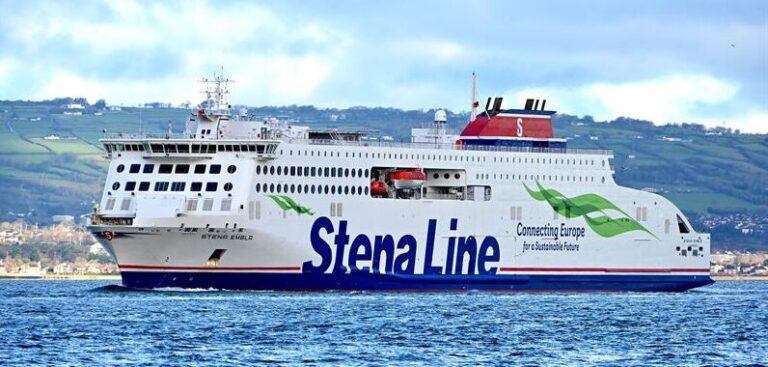
In 2020, ferry company Stena Line said that it was continuing to reduce its total CO2  emissions and was 10 years ahead of the IMO international shipping emission reduction targets. Nevertheless, the Swedish shipping company says it is now accelerating the transition to fossil-free shipping and has presented its plan to reduce total CO2  emissions by as much as 30% by 2030.

“We are working hard to reduce our fuel consumption and emissions, while at the same time exploring tomorrow’s fuels and technologies. The main driver behind the reduction of emissions in 2020 was that we introduced three new – and up to 30% more energy-efficient – vessels on the Irish Sea. We have also introduced renewable shore electricity during port calls in Kiel, and five more ships in the fleet have been equipped with the AI assistant Stena Fuel Pilot to support our captains in operating the vessels in the most energy-efficient way,” explained Erik Lewenhaupt, group head of sustainability at Stena Line.

“Our ambition is to lead the development toward fossil-free shipping and sustainable transportation by sea. This means that we need to break our dependence on fossil fuels and start reducing our total emissions, and not only become more efficient per sailing and transported unit. Therefore, Stena Line has now chosen to set the ambitious target to reduce our total carbon dioxide emissions by 30% by 2030, because in the end they need be zero,” added Stena Line’s CEO, Niclas Mårtensson.

Stena Line says it has identified several ways to reduce carbon dioxide emissions by 30% by 2030 and achieve the ambitious target of becoming completely fossil-free by 2050.

Key among these is increasing the electrification of its fleet. Since 2018 the Stena Jutlandica battery hybrid has operated on the route between Gothenburg and Fredrikshamn; by 2030, the company’s fossil-free ferry Stena Elektra will traverse the entire route on battery power only, a distance of 50 nautical miles.

Electrification of Stena’s port and terminals also continued during 2020 and today Stena Line uses 99.8% renewable electricity. At 25% of Stena Line’s terminals, the ships connect to green electricity during port calls, which in 2020 reduced the company’s carbon dioxide emissions by more than 13,000 tons, equal to the annual emissions from 7,200 passenger cars.

Stena Line is also investigating several alternative fuels such as hydrogen and fuel cells. In 2021, a test is planned with methanol recovered from residual steel production gases.

Share. Twitter LinkedIn Facebook Email
Previous ArticleConstruction commences on 10 electric ferries for Portuguese line
Next Article Software specialist NAPA joins Clean Propulsion Technologies project

Related Posts

New Vessels

First fully electric harbor tug in Southeast Asia delivered

March 19, 20262 Mins Read
Power and Propulsion

Bibby Marine analysis highlights cost benefits of electrified offshore wind service vessels

March 6, 20263 Mins Read
Ferries and Cruises

Glosten to design hybrid-electric ferry for southeast Alaska ports

February 20, 20261 Min Read
Latest News

Bureau Veritas classes two advanced high-speed all-electric trimarans

March 24, 2026

Princeton University tests Kilo Hydro at Mercury Racing’s Lake X

March 24, 2026

Joint study shows path to green ammonia cost parity

March 19, 2026

Receive breaking stories and features in your inbox each week, for free


Enter your email address:


Supplier Spotlights
  • Hydro
Getting in Touch
  • Contact Us / Advertise
  • Meet the Editors
  • Media Pack
  • Free Weekly E-Newsletter
Our Social Channels
  • LinkedIn
UKi Media & Events
© 2026 UKi Media & Events a division of UKIP Media & Events Ltd
  • Terms and Conditions
  • Privacy Policy
  • Cookie Policy
  • Notice & Takedown Policy

Type above and press Enter to search. Press Esc to cancel.