


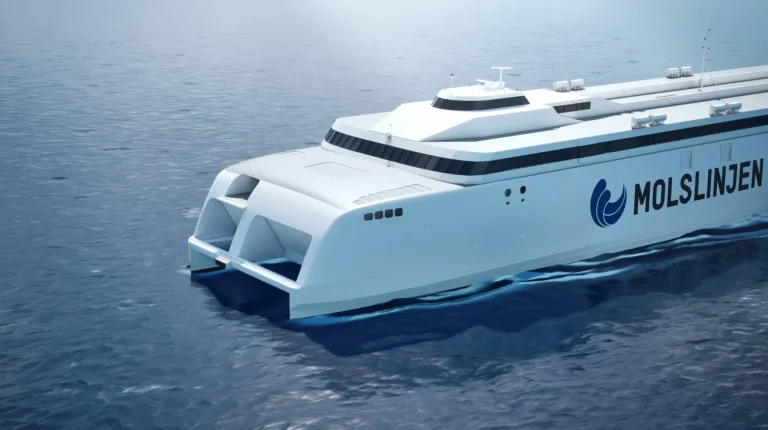
Incat, Wärtsilä and Molslinjen have presented a video showcasing the development of three large battery-electric ferries currently under construction in Tasmania.
The video premiered at the Shippax Conference 2026 and provides an overview of the vessels, which are being built at Incat’s shipyard in Hobart. At 129m in length, the ferries are expected to be the largest electric vessels of their type operating in Europe.
The project combines shipbuilding, propulsion and operational expertise, as the maritime sector continues its efforts to reduce emissions.
Robert Clifford, chairman of Incat, said, “This project shows that large-scale, high-speed electric ferries are no longer a future concept, they are being delivered today.”
He added, “Previously, electric ferries have been limited to short, low-speed routes. What we’re delivering now is a new class of vessel – high-speed, high-capacity, low-emission ferries capable of operating on some of the world’s busiest routes.”
Carsten Jensen, CEO of Molslinjen, said, “These vessels will operate at speeds of up to 40kts, carry up to 1,500 passengers and be capable of rapid turnaround through high-capacity charging in port – delivering faster, cleaner and more efficient transport across the busy Kattegat route.”
He added that the project represents a step forward in the company’s decarbonization strategy and demonstrates that electric ferry transportation can be delivered at scale.
Roger Holm, president of Wärtsilä Marine and EVP of Wärtsilä Corporation, said, “The shift to electric propulsion requires close collaboration across the entire maritime chain. Through our partnership with Incat and Molslinjen, we are delivering advanced, fully integrated energy and propulsion systems that make high-speed, large-scale electric ferry operations possible.”
Once completed, the ferries will enter service in Denmark, operating on the Kattegat route as part of Molslinjen’s network.
In related news, Echandia to supply battery system for Gotlandsbolaget hybrid ferry