


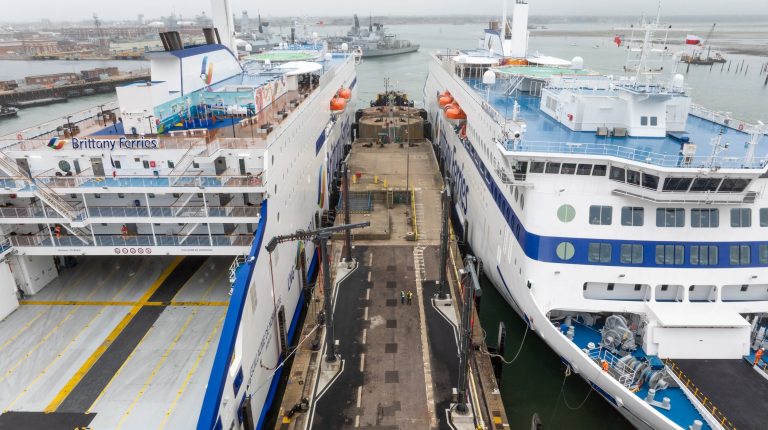
Portsmouth International Port has activated its shore power system, enabling ferries and cruise ships to plug into clean electricity for the first time, as the port works toward becoming the UK’s first zero-emissions port by 2050.
Brittany Ferries’ hybrid-electric ships St Malo and Guillaume de Normandie, part of a €550m (US$625m) fleet renewal, were the first vessels to charge during the system’s final testing phase. Two cruise ships have also tested the system: AIDA’s AIDAsol and Phoenix Risen’s Amera. The system is designed to allow up to three ships to plug in simultaneously, which is expected to happen later this year.
The system was funded with £19.8m (US$26.3m) from the Department for Transport and £4.6m (US$6.1m) from Portsmouth ciy council, with the council providing a further £3m (US$4m) to secure the required grid capacity. It is described as the UK’s first multi-berth, multi-user, multi-frequency shore power system, enabling vessels to turn off engines while alongside. Ships with batteries will also be able to enter and exit the harbor under electric power. The port says the system is projected to help avoid around 20,000 metric tons of CO2 e in emissions from 2027, as part of its air quality and decarbonization goals.
Mike Sellers, Portsmouth International Port director, said, “This is a huge moment not only for us, but also for the UK ports industry as a whole, as we are now the country’s first port to offer multi-berth, multi-user shore power.” He added that high electricity prices remain a challenge, “We’re continuing to lobby the government hard to ensure they address these and make electrification a more attractive business proposition for us and for ports across the country.”
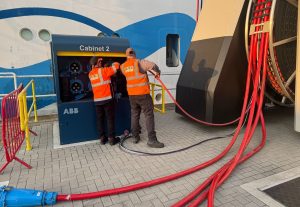
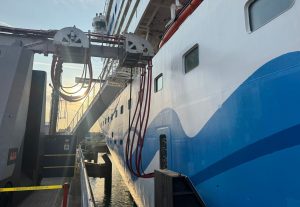
Christophe Mathieu, chief executive officer at Brittany Ferries, said, “This isn’t just leading-edge technology, it’s a concrete step in our decarbonization journey and, perhaps most importantly, a commitment to being a good neighbor.”
Councillor Steve Pitt, leader of Portsmouth city council, said, “There are always risks when being early adopters of new technology… our priority with the shore power system has always been helping to improve air quality in the city.”
Maritime, aviation and decarbonisation minister Keir Mather said the project represented “a major milestone in decarbonizing UK shipping.”
The project, known as Sea Change, involved partners including Barter 4 Things, MSE International, Swanbarton and the University of Portsmouth.
Related news, Rotterdam study sets out pathway for nuclear-powered commercial ship port calls