


Close Menu
Advanced Maritime Technology International
  • News
    • A-M
      • Battery Technology
      • Environmental
      • Equipment and Services
      • Expo
      • Ferries and Cruises
      • Marine Construction
      • Marine Renewables
    • N-Z
      • Naval Projects
      • Onboard Systems
      • Ports and Harbours
      • Power and Propulsion
      • Shipyards and Shipbuilding
      • Vessel Build and Maintenance
  • Features
  • Online Magazines
  • Opinion
  • Videos
  • Supplier Spotlight
LinkedIn Facebook X (Twitter)
  • Sign-up for Free Weekly E-Newsletter
  • Meet the Editors
  • Contact Us
  • Media Pack
LinkedIn
Subscribe
Advanced Maritime Technology International
  • News
      • Alternative Fuels
      • Autonomous Technology
      • Awards
      • Battery Technology
      • Expo
      • Ferries and Cruises
      • Hydrogen
      • Legislation
      • Motor Technologies
      • New Vessels
      • Onboard Systems
      • Ports and Harbours
      • Power and Propulsion
      • Shipyards and Shipbuilding
      • Vessel Design
  • Features
  • Online Magazines
    1. January 2026
    2. September 2025
    3. April/May 2025
    4. January 2025
    5. September 2024
    6. April 2024
    7. Archive Issues
    8. Subscribe Free!
    Featured
    December 4, 2025

    In this issue – January 2026

    Online Magazines By Web Team
    Recent

    In this issue – January 2026

    December 4, 2025

    In this issue – September 2025

    August 6, 2025

    In this issue – April/May 2025

    May 14, 2025
  • Subscribe
  • Opinion
  • Videos
  • Awards
    • Electric & Hybrid Marine Awards 2025 – Nominations open
    • 2024 Winners
    • 2023 Winners
    • 2022 Winners
    • Previous Winners
  • Supplier Spotlight
  • Expo
LinkedIn Facebook
Subscribe
Advanced Maritime Technology International
Battery Technology

Oxis Energy promises delivery of solid-state lithium sulfur cells by autumn

Lawrence ButcherBy Lawrence ButcherApril 26, 20213 Mins Read
Share
LinkedIn Twitter Facebook Email

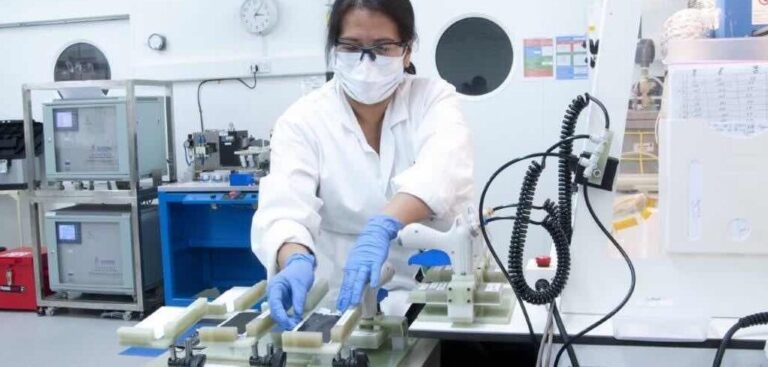
UK-based battery developer Oxis Energy says it will deploy solid-state lithium sulfur (Li-S) cell and battery systems to its clients and partners worldwide by autumn 2021, for use in trials, proof of concept and demonstrator battery systems for the aviation, marine, defense and heavy electric vehicles (HEV) sectors.

Oxis says that it has been collaborating with European manufacturers on the development of solid-state Li-S technology for almost four years. As a result of a technological breakthrough three years ago, the company filed nine new families of patents to protect both quasi and solid-state intellectual property rights.

The company notes that the identical manufacturing process to conventional Li-S and Li-ion makes delivery of the batteries achievable by late autumn 2021. The first-generation quasi solid-state Li-S cell at 450Wh/kg specific energy, with an energy density of 550Wh/L will be delivered by summer 2022. A target of 550Wh/kg, 700Wh/L has already been set for autumn 2023.

The above key performance indicators have been agreed commercially between Oxis and Sanyo Trading of Japan to meet customer requirements for the Japanese market. The cell capacity will range from 10-20Ah. Independently of the above, Oxis has set forecast targets of 600Wh/kg and 900Wh/L to be achieved by 2026.

Huw Hampson Jones, CEO at Oxis Energy, said, “With immediate effect, existing clients have been informed that all new programs will use Oxis solid-state Li-S cell technology. Based on our US client base, we know that aircraft manufacturers welcome the move from conventional to solid-state Li-S. Oxis Li-S cell technology is inherently safer than Li-ion, as sulfur acts as a passivation of the lithium metal. Oxis has perfected mechanisms whereby greater levels of safety and longevity are achieved as we move toward rollout of quasi solid-state Li-S in 2021/2022. In 2020, Oxis successfully powered an all-electric US aircraft, meeting client and Federal Aviation Authority requirements.”

The company highlights that the attraction of its cells for vehicle markets is that, on average, the battery systems are up to 60% lighter than conventional Li-ion battery systems. The company will aim to commercialize the mass production of the chemical composition of its cells at its Welsh Plant in Port Talbot, UK. The cells will then be mass-produced at its cell manufacturing plant in Juiz de Fora, in the state of Minas Gerais, Brazil.

Nordika Pharmaceutical of São Paulo has already commenced the design work at the factory with completion expected in the autumn. Commissioning is expected in 2023. Unlike Li-ion, the cells chemistry manufactured by Oxis does not contain cobalt, manganese, nickel or copper.

Share. Twitter LinkedIn Facebook Email
Previous ArticleHybrid propulsion for offshore service vessel
Next Article Eco-sustainable hybrid ro-ro vessel launched by Finnlines

Related Posts

Vessel Build and Maintenance

UECC orders two multi-fuel battery-hybrid PCTCs

March 9, 20263 Mins Read
Battery Technology

AYK Energy to supply battery system for Germany’s next Polarstern research vessel

March 4, 20262 Mins Read
Battery Technology

Kongsberg Maritime to deliver integrated technology package for LS Marine Solution’s advanced cable laying vessel

February 25, 20263 Mins Read
Latest News

Bureau Veritas classes two advanced high-speed all-electric trimarans

March 24, 2026

Princeton University tests Kilo Hydro at Mercury Racing’s Lake X

March 24, 2026

Joint study shows path to green ammonia cost parity

March 19, 2026

Receive breaking stories and features in your inbox each week, for free


Enter your email address:


Supplier Spotlights
  • Ampros sp. z o. o.
Getting in Touch
  • Contact Us / Advertise
  • Meet the Editors
  • Media Pack
  • Free Weekly E-Newsletter
Our Social Channels
  • LinkedIn
UKi Media & Events
© 2026 UKi Media & Events a division of UKIP Media & Events Ltd
  • Terms and Conditions
  • Privacy Policy
  • Cookie Policy
  • Notice & Takedown Policy

Type above and press Enter to search. Press Esc to cancel.