


Close Menu
Advanced Maritime Technology International
  • News
    • A-M
      • Battery Technology
      • Environmental
      • Equipment and Services
      • Expo
      • Ferries and Cruises
      • Marine Construction
      • Marine Renewables
    • N-Z
      • Naval Projects
      • Onboard Systems
      • Ports and Harbours
      • Power and Propulsion
      • Shipyards and Shipbuilding
      • Vessel Build and Maintenance
  • Features
  • Online Magazines
  • Opinion
  • Videos
  • Supplier Spotlight
LinkedIn Facebook X (Twitter)
  • Sign-up for Free Weekly E-Newsletter
  • Meet the Editors
  • Contact Us
  • Media Pack
LinkedIn
Subscribe
Advanced Maritime Technology International
  • News
      • Alternative Fuels
      • Autonomous Technology
      • Awards
      • Battery Technology
      • Expo
      • Ferries and Cruises
      • Hydrogen
      • Legislation
      • Motor Technologies
      • New Vessels
      • Onboard Systems
      • Ports and Harbours
      • Power and Propulsion
      • Shipyards and Shipbuilding
      • Vessel Design
  • Features
  • Online Magazines
    1. January 2026
    2. September 2025
    3. April/May 2025
    4. January 2025
    5. September 2024
    6. April 2024
    7. Archive Issues
    8. Subscribe Free!
    Featured
    December 4, 2025

    In this issue – January 2026

    Online Magazines By Web Team
    Recent

    In this issue – January 2026

    December 4, 2025

    In this issue – September 2025

    August 6, 2025

    In this issue – April/May 2025

    May 14, 2025
  • Subscribe
  • Opinion
  • Videos
  • Awards
    • Electric & Hybrid Marine Awards 2025 – Nominations open
    • 2024 Winners
    • 2023 Winners
    • 2022 Winners
    • Previous Winners
  • Supplier Spotlight
  • Expo
LinkedIn Facebook
Subscribe
Advanced Maritime Technology International
Environmental

Danfoss Editron and Volvo Penta collaborate on CTV propulsion system

Callum Brook-JonesBy Callum Brook-JonesNovember 15, 20213 Mins Read
Share
LinkedIn Twitter Facebook Email

Wind farm transfer company MHO-Co is to help meet sustainable transportation demands following the recent delivery of two hybrid electric crew transfer vessels (CTVs). An announcement at the recent COP26 revealed that £160m (US$214m) of funding will be given to support the construction of floating offshore wind farms in Scotland and Wales.

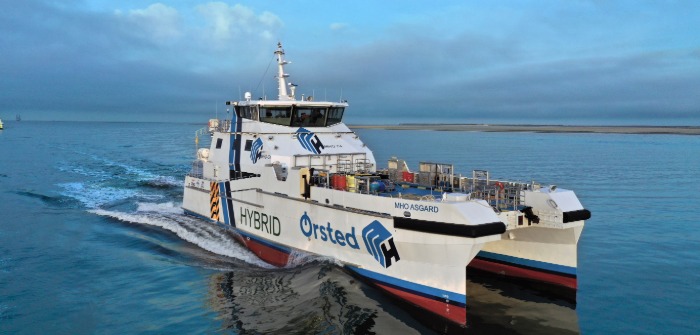
The MHO Asgard and the MHO Apollo CTVs feature Volvo Penta and Danfoss Editron technology and will service Ørsted’s Hornsea Project 2 offshore wind farm in the North Sea by transporting workers and supplies.

“Cross-industry collaboration is needed now more than ever to take steps toward mitigating the negative impacts of climate change,” said Peter Granqvist, chief technology officer at Volvo Penta. “By working together, we’ve been able to begin to make real change with impressive fuel and emissions savings as well as more flexible operation for our customers.”

Both CTVs feature Volvo Penta’s Inboard Performance System (IPS), which is already having a positive environmental impact. With the IPS having already delivered up to 30% reduced emissions with combustion engines – compared with traditional inboard shaft installations – the hybrid system can now deliver an additional fuel saving of 20.89%. CO2 emissions can also be reduced by 20.96% compared with the already efficient Volvo Penta IPS vessels in MHO-Co’s fleet.

The hybrid vessels also benefit from multiple power systems onboard, which Volva Penta refers to as the ‘power of plenty’.

“This new system gives us more flexibility and allows us to switch between engines and do maintenance when it fits our schedule, without affecting the service to our customers,” explained Mik Henriksen, CEO of MHO-Co. “We are also able to use just one small engine when idling in the wind park, offering significant fuel saving and noise advantage when in waiting position. I think we have the best system possible with the technology that exists today.”

The vessels have been in operation for over a month, with 330 engine hours logged between the pair already. One-thousand hours of run time were previously completed on the vessels’ maiden voyages from China to the North Sea.

Through the collaboration, Danfoss Editron and Volvo Penta have enabled the vessels to operate in a zero-emissions electric mode for up to eight hours. When combined with fuel propulsion, the CTVs can reach a maximum speed of approximately 24kts.

“In these hybrid crew transfer vessels, we are addressing marine electrified propulsion with one total system solution,” said Granqvist.
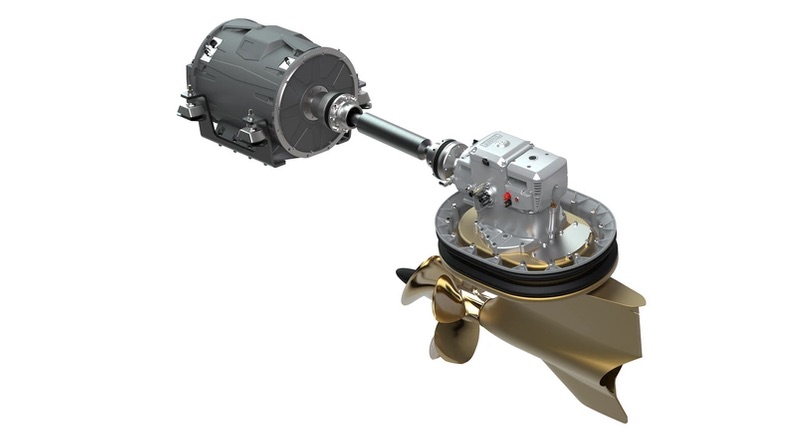
Volvo Penta’s Electric IPS
Share. Twitter LinkedIn Facebook Email
Previous ArticleIn this Issue – October 2021
Next Article Saietta launches electric marine motor division

Related Posts

Power and Propulsion

Princeton University tests Kilo Hydro at Mercury Racing’s Lake X

March 24, 20263 Mins Read
Equipment and Services

Alfa Laval expands AR-enabled remote support to boost vessel performance and compliance

March 19, 20263 Mins Read
New Vessels

AET and Fleetzero to develop world’s longest-range hybrid-electric vessel

March 16, 20262 Mins Read
Latest News

Bureau Veritas classes two advanced high-speed all-electric trimarans

March 24, 2026

Princeton University tests Kilo Hydro at Mercury Racing’s Lake X

March 24, 2026

Joint study shows path to green ammonia cost parity

March 19, 2026

Receive breaking stories and features in your inbox each week, for free


Enter your email address:


Supplier Spotlights
  • Adwatec
Getting in Touch
  • Contact Us / Advertise
  • Meet the Editors
  • Media Pack
  • Free Weekly E-Newsletter
Our Social Channels
  • LinkedIn
UKi Media & Events
© 2026 UKi Media & Events a division of UKIP Media & Events Ltd
  • Terms and Conditions
  • Privacy Policy
  • Cookie Policy
  • Notice & Takedown Policy

Type above and press Enter to search. Press Esc to cancel.