

Close Menu
Advanced Maritime Technology International
  • News
    • A-M
      • Battery Technology
      • Environmental
      • Equipment and Services
      • Expo
      • Ferries and Cruises
      • Marine Construction
      • Marine Renewables
    • N-Z
      • Naval Projects
      • Onboard Systems
      • Ports and Harbours
      • Power and Propulsion
      • Shipyards and Shipbuilding
      • Vessel Build and Maintenance
  • Features
  • Online Magazines
  • Opinion
  • Videos
  • Supplier Spotlight
LinkedIn Facebook X (Twitter)
  • Sign-up for Free Weekly E-Newsletter
  • Meet the Editors
  • Contact Us
  • Media Pack
LinkedIn
Subscribe
Advanced Maritime Technology International
  • News
      • Alternative Fuels
      • Autonomous Technology
      • Awards
      • Battery Technology
      • Expo
      • Ferries and Cruises
      • Hydrogen
      • Legislation
      • Motor Technologies
      • New Vessels
      • Onboard Systems
      • Ports and Harbours
      • Power and Propulsion
      • Shipyards and Shipbuilding
      • Vessel Design
  • Features
  • Online Magazines
    1. January 2026
    2. September 2025
    3. April/May 2025
    4. January 2025
    5. September 2024
    6. April 2024
    7. Archive Issues
    8. Subscribe Free!
    Featured
    December 4, 2025

    In this issue – January 2026

    Online Magazines By Web Team
    Recent

    In this issue – January 2026

    December 4, 2025

    In this issue – September 2025

    August 6, 2025

    In this issue – April/May 2025

    May 14, 2025
  • Subscribe
  • Opinion
  • Videos
  • Awards
    • Electric & Hybrid Marine Awards 2025 – Nominations open
    • 2024 Winners
    • 2023 Winners
    • 2022 Winners
    • Previous Winners
  • Supplier Spotlight
  • Expo
LinkedIn Facebook
Subscribe
Advanced Maritime Technology International
Battery Technology

Affordable cathode materials breakthrough

Lawrence ButcherBy Lawrence ButcherJuly 3, 20202 Mins Read
Share
LinkedIn Twitter Facebook Email

According to researchers at the University of Saskatchewan, the use of affordable materials in battery cathodes for large scale applications, including marine use, could soon become a reality.

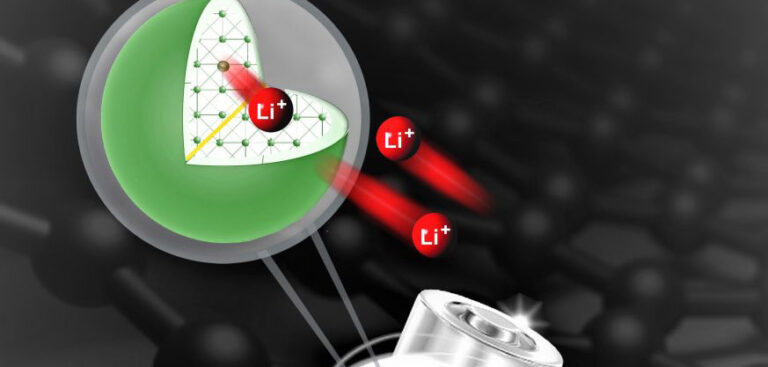
“Cathodes represent 40% of the cost of the batteries that we are using in our phones right now. They are absolutely crucial to improve battery performance and reduce dependency on cobalt,” said Majid Rasool, lead author on a paper (PEDOT Encapsulated and Mechanochemically Engineered Silicate Nanocrystals for High Energy Density Cathodes) that investigates the use of iron and silicon for cathodes.

Both iron and silicon are abundant materials, hence why Rasool’s research team wanted to further investigate their potential in battery applications. Lithium iron silicate has a theoretically high energy capacity, but to date, this has not been realized under real-world conditions.

The group’s breakthrough came thanks to applying an electronically conducting polymer called PEDOT on the surface of cathode nanocrystals through a controlled interfacial reaction. Testing revealed an impressive initial battery capacity as well as improved performance over many charging cycles.

“We were not expecting that big of a jump in performance over [traditional] carbon coating. I knew this could work, but when we got the results, it was really quite fascinating,” said Rasool. Encapsulating nanocrystals in PEDOT was technically difficult to achieve, taking nearly two years of effort, but resulted in what Rasool called “remarkable enhancements” to performance, both in terms of initial and long-term capacity.

The Canadian Light Source (CLS) facility, which houses a synchrotron light source, located at the university, was used to further investigate the underlying reasons behind the encouraging experimental results. Specifically, the researchers used the SM (soft x-ray spectromicroscopy) and Canadian Macromolecular Crystallography Facility beamlines.

Rasool noted, “The CLS was very helpful to let us dig deeper and begin to explain why the PEDOT coating treatment and the sub-surface iron-rich layer improved performance so much.”

Though still very much at the experimental stage, Rasool stated, “there’s still work to be done to understand why and build on this, but this coating process opens up new engineering strategies for batteries.”

Share. Twitter LinkedIn Facebook Email
Previous ArticlePenetration testing of a marine battery pack
Next Article Successful sea trials for solar yacht

Related Posts

Vessel Build and Maintenance

UECC orders two multi-fuel battery-hybrid PCTCs

March 9, 20263 Mins Read
Battery Technology

AYK Energy to supply battery system for Germany’s next Polarstern research vessel

March 4, 20262 Mins Read
Battery Technology

Kongsberg Maritime to deliver integrated technology package for LS Marine Solution’s advanced cable laying vessel

February 25, 20263 Mins Read
Latest News

Bureau Veritas classes two advanced high-speed all-electric trimarans

March 24, 2026

Princeton University tests Kilo Hydro at Mercury Racing’s Lake X

March 24, 2026

Joint study shows path to green ammonia cost parity

March 19, 2026

Receive breaking stories and features in your inbox each week, for free


Enter your email address:


Supplier Spotlights
  • Transfluid
Getting in Touch
  • Contact Us / Advertise
  • Meet the Editors
  • Media Pack
  • Free Weekly E-Newsletter
Our Social Channels
  • LinkedIn
UKi Media & Events
© 2026 UKi Media & Events a division of UKIP Media & Events Ltd
  • Terms and Conditions
  • Privacy Policy
  • Cookie Policy
  • Notice & Takedown Policy

Type above and press Enter to search. Press Esc to cancel.