


Close Menu
Advanced Maritime Technology International
  • News
    • A-M
      • Battery Technology
      • Environmental
      • Equipment and Services
      • Expo
      • Ferries and Cruises
      • Marine Construction
      • Marine Renewables
    • N-Z
      • Naval Projects
      • Onboard Systems
      • Ports and Harbours
      • Power and Propulsion
      • Shipyards and Shipbuilding
      • Vessel Build and Maintenance
  • Features
  • Online Magazines
  • Opinion
  • Videos
  • Supplier Spotlight
LinkedIn Facebook X (Twitter)
  • Sign-up for Free Weekly E-Newsletter
  • Meet the Editors
  • Contact Us
  • Media Pack
LinkedIn
Subscribe
Advanced Maritime Technology International
  • News
      • Alternative Fuels
      • Autonomous Technology
      • Awards
      • Battery Technology
      • Expo
      • Ferries and Cruises
      • Hydrogen
      • Legislation
      • Motor Technologies
      • New Vessels
      • Onboard Systems
      • Ports and Harbours
      • Power and Propulsion
      • Shipyards and Shipbuilding
      • Vessel Design
  • Features
  • Online Magazines
    1. January 2026
    2. September 2025
    3. April/May 2025
    4. January 2025
    5. September 2024
    6. April 2024
    7. Archive Issues
    8. Subscribe Free!
    Featured
    December 4, 2025

    In this issue – January 2026

    Online Magazines By Web Team
    Recent

    In this issue – January 2026

    December 4, 2025

    In this issue – September 2025

    August 6, 2025

    In this issue – April/May 2025

    May 14, 2025
  • Subscribe
  • Opinion
  • Videos
  • Awards
    • Electric & Hybrid Marine Awards 2025 – Nominations open
    • 2024 Winners
    • 2023 Winners
    • 2022 Winners
    • Previous Winners
  • Supplier Spotlight
  • Expo
LinkedIn Facebook
Subscribe
Advanced Maritime Technology International
Battery Technology

Corvus Energy enables emission-free sailing into World Heritage fjord

Callum Brook-JonesBy Callum Brook-JonesJune 9, 20223 Mins Read
Share
LinkedIn Twitter Facebook Email

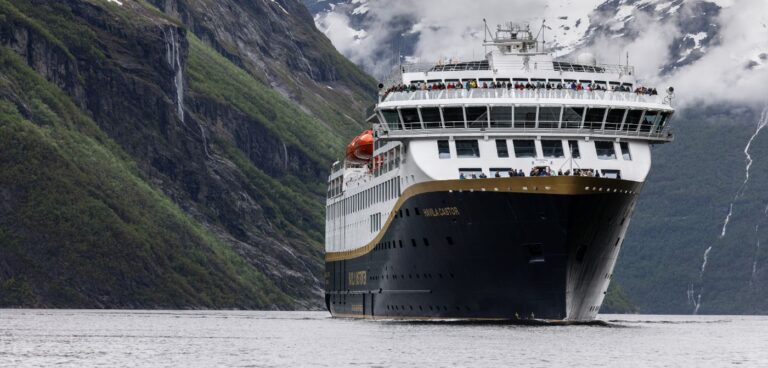
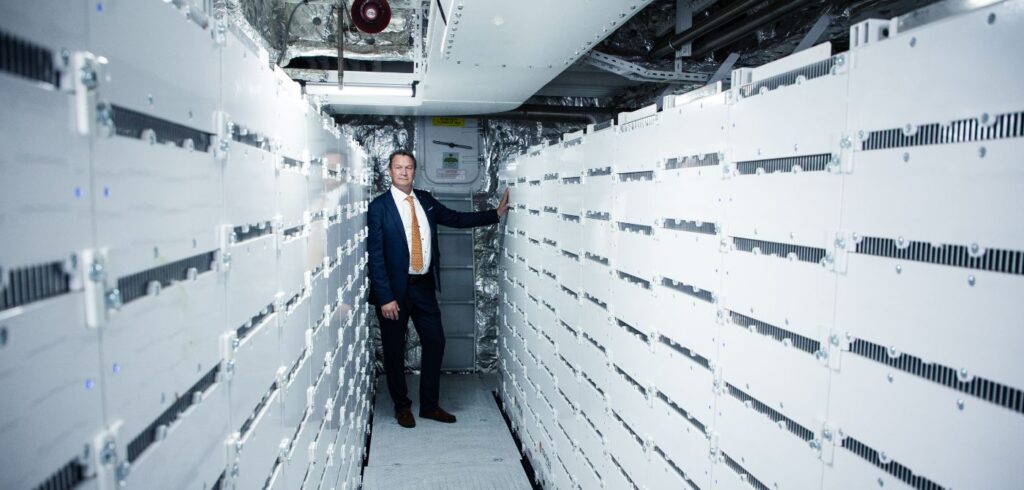
The passenger ship Havila Castor achieved zero-emission sailing in and out of the Geiranger fjord in Norway on June 2, aided by a Corvus Energy 6.1MWh Orca battery system. The system is believed to be the largest battery pack installed on board a commercial vessel.

The energy storage systems – when used in combination with other sustainable technologies on board – have the capacity to reduce CO2 emissions by approximately 30% and NOx emissions by 90%. As biogas is gradually blended, CO2 emissions will be reduced further to 50% in 2023 and 80% in 2024. Additionally, to ensure each ship is futureproofed, each has been prepared for the installation of hydrogen and fuel cells by HAV Hydrogen. The Havila Castor is one of four identical ships being built for Havila Kystruten to serve the coastal route between Bergen and Kirkenes in the north of Norway.

The trip from the city of Ålesund and back took the Havila Castor nine hours, and for three of those the vessel carried out operations on battery only. Following the three-hour stint the battery pack had a remaining capacity of 40%, enabling longer zero-emission travel if required.

A multitude of partners were involved with the project, including HAV Design who designed the vessel and Norwegian Greentech who provided a low-energy, low-footprint ballast water cleaning system. Norwegian Electric Systems integrated the system and supplied the hybrid gas-electric propulsion system inclusive of battery packs and generators with complete switchboards. The company also integrated Raven INS, a fully integrated bridge system with smart features such as data hoarding and analysis to continuously develop better and more efficient operations.

“This is a milestone for Corvus Energy and a big step for the decarbonization of shipping,” said Geir Bjørkeli, CEO, Corvus Energy “For the first time in history, a large passenger ship has sailed this route silent and emission-free. This proves that technology is ready even for large ships to operate in zero-emission mode for longer periods of time.

“The world’s most beautiful coastline now has the world’s most environmentally friendly coastal ship,” commented Bent Martini, CEO, Havila Kystruten. “By continuous focus on the environment and the best passenger experience, we have managed to set a new standard for the cruise and passenger industry. The first trip on battery alone went exceptionally well and we see that we can achieve even more by testing and finetuning all the systems on board. Feedback from our customers has been phenomenal: sailing in complete silence and hearing the waterfalls and birds singing while entering the fjord with steep mountains on every side was for all an amazing experience.”
Share. Twitter LinkedIn Facebook Email
Previous ArticleAiP awarded to Samsung Heavy Industries’ ammonia-fueled Neo-Panamax vessel
Next Article Port of Gothenburg to provide shoreside power for tankers

Related Posts

Vessel Build and Maintenance

UECC orders two multi-fuel battery-hybrid PCTCs

March 9, 20263 Mins Read
Battery Technology

AYK Energy to supply battery system for Germany’s next Polarstern research vessel

March 4, 20262 Mins Read
Battery Technology

Kongsberg Maritime to deliver integrated technology package for LS Marine Solution’s advanced cable laying vessel

February 25, 20263 Mins Read
Latest News

Bureau Veritas classes two advanced high-speed all-electric trimarans

March 24, 2026

Princeton University tests Kilo Hydro at Mercury Racing’s Lake X

March 24, 2026

Joint study shows path to green ammonia cost parity

March 19, 2026

Receive breaking stories and features in your inbox each week, for free


Enter your email address:


Supplier Spotlights
  • Ampros sp. z o. o.
Getting in Touch
  • Contact Us / Advertise
  • Meet the Editors
  • Media Pack
  • Free Weekly E-Newsletter
Our Social Channels
  • LinkedIn
UKi Media & Events
© 2026 UKi Media & Events a division of UKIP Media & Events Ltd
  • Terms and Conditions
  • Privacy Policy
  • Cookie Policy
  • Notice & Takedown Policy

Type above and press Enter to search. Press Esc to cancel.